Hey there, if you’ve ever needed small metal parts for something like a bike, a medical device, or a factory machine, you’ve probably worked with turned parts—you know, those components cut, drilled, or shaped on lathes. But if you’re a buyer, have you ever stopped to think: what actually makes a good turned part? I’ve been a turned parts supplier for over a decade, and I can tell you it’s not just about the part fitting on a shelf. There are real, practical quality standards we live by every single day, and they’re way more down-to-earth than the fancy industry jargon you might see online. Let me break this down like I would with a regular buyer who’s got a tight deadline and doesn’t have time for fluff. Turned Parts
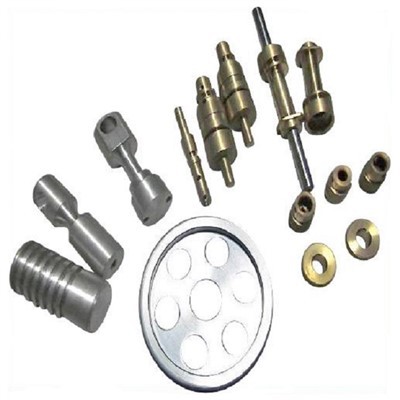
First off, let’s start with material compliance. This sounds boring, but it’s make-or-break. You can’t just grab any random chunk of steel, aluminum, or brass and turn it into a part. If your part is going on a food processing machine, it needs to be made of a material that meets food-grade standards—no random contaminants leaching into whatever’s being processed. If it’s for a car engine, it needs a material that can handle high heat and pressure. I once had a buyer come to me with a low quote for a stainless steel bolt that was supposed to be for a marine application. Turns out, the other supplier was using regular steel coated to look like stainless, which would rust within six months in saltwater. We make sure every material we use has a certified mill test report (MTR)—it’s basically a paper trail that tells us exactly what the material is made of, its strength, its hardness, everything. No cutting corners here; that MTR is non-negotiable for all our parts.
Next up, dimensional accuracy. That’s just a fancy way of saying “does the part fit where it’s supposed to?” Let’s say you need a pin for a plastic housing. If the pin’s diameter is even 0.001 inches too big, it won’t slide into the housing. If it’s 0.001 inches too small, it’ll wiggle loose and break. We don’t just guess here—we use tools like micrometers, dial calipers, and coordinate measuring machines (CMMs) to check every critical dimension. And here’s a thing: different parts have different tolerances. A decorative knob for a lamp might have a tolerance of ±0.005 inches, but a medical implant component? That’s ±0.0005 inches, almost 10 times tighter. We work with our buyers to nail down exactly what tolerance they need upfront, because trying to tighten a tolerance that doesn’t matter just makes the part way more expensive. No sense in paying for perfection you don’t need.
Surface finish is another big one, and it’s not just about looking pretty. A rough surface on a bearing part will cause friction, wear out fast, and lead to machine breakdowns. A smooth surface on a medical syringe part is actually critical—if it’s too rough, it can tear tissue when inserted, or even harbor bacteria. We measure surface finish in Ra values, which is a number that tells how smooth the surface is. A Ra of 0.8 micrometers is super smooth, good for medical parts, while a Ra of 3.2 micrometers is fine for structural parts that don’t need to touch human tissue. We also watch for things like burrs—those tiny sharp bits left over from turning. Even a tiny burr on a small electronic connector can short out a circuit. We have a post-processing step where we deburr every part, no exceptions. It’s an extra 10 minutes per part, but it saves our buyers from so many headaches down the line.
Then there’s material integrity—no flaws inside the part. When you’re turning a part from a solid bar, you don’t want internal voids, cracks, or inclusions. Those can cause the part to break under pressure, especially if it’s a high-stress application like a crane hook or a engine valve. We do regular inspections with non-destructive testing (NDT) methods, like ultrasonic testing, which lets us check inside the part without damaging it. I had a buyer send us a sample part that broke during a stress test, and when we did ultrasonic testing, we found a tiny void inside that the other supplier missed. That’s the kind of thing that makes a buyer lose trust, so we make sure we catch those flaws before parts leave our shop.
Heat treatment and finishing—this is where parts get their strength or corrosion resistance. If you need a part that’s going to last outdoors, we can zinc plate it, anodize it, or even powder coat it. If you need a part that’s super strong, we can heat treat it to make it harder, like quenching and tempering for steel. But here’s the catch: if the heat treatment is done wrong, it can make the part too brittle, so it breaks instead of bending, or not hard enough, so it wears out fast. We work with certified heat treatment vendors, and we do tests on every batch to make sure the hardness is right. We also check that the finish is applied evenly—no thin spots on the plating that will rust after a few months.
Now, let’s talk about consistency. One bad part can ruin a whole assembly, so every part in a batch has to be the same. We run first-part inspections on every new batch—make sure the first part meets all the specs, then we keep checking random parts as the batch runs. Over the years, we’ve invested in better machines that reduce variation, so most of our parts are within tolerance 99% of the time. We’ve had buyers come back to us because a previous supplier’s parts were all over the place—one pin was too thick, the next too thin, so they couldn’t assemble their product. We don’t do that; consistency is how we keep our customers coming back.
Wait, let’s not forget about functional testing. Depending on the part, it might need to work in real conditions. If it’s a fuel line fitting, we test for leaks under pressure. If it’s a gear, we test how much torque it can handle before it breaks. This isn’t always required, but it’s something we do for a lot of our customers to give them peace of mind. For example, a recent customer making small water pumps asked us to test every pump impeller for flow rate and pressure. We found one impeller in the first batch was off, and fixed it before they sent any to their clients. That saved them from a lot of warranty claims.
Now, let’s keep it real—no supplier is perfect, but how we handle mistakes matters. If a part comes back as faulty, we take responsibility, no excuses. We’ll replace it, no extra charge, and figure out what went wrong so it doesn’t happen again. That’s a big part of quality too—how you respond when things go sideways. I’ve seen other suppliers blame the buyer, blame the material, blame the machine, but we own it. That’s why we’ve had some of our clients for 15+ years.

At the end of the day, all these standards boil down to one thing: making parts that work for our customers, not just pass a inspection checklist. If you’re in the market for turned parts, don’t just go for the lowest quote. Ask about their MTRs, their tolerance capabilities, their deburring process, and how they handle defective parts. If you want to chat through your project, talk through your specs, or get a quote, we’re here to help. No sales pitch, no pressure, just straight talk about what you need and what we can deliver.
Cnc Turned Parts References:
- AS9100 Quality Management Systems for Aviation, Space, and Defense Organizations
- ISO 9001:2015 Quality Management Requirements
- Metal Finishing Guidebook, Products Finishing Magazine
- NDT Principles and Applications, American Society for Nondestructive Testing
Hangzhou Zhalihui Import And Export Co., Ltd.
We are one of the most experienced turned parts manufacturers and suppliers in China, specialized in providing high quality customized products. Please feel free to buy discount turned parts in stock here from our factory. Contact us for quotation.
Address: Room 2801, Building 2, Taifu Plaza, No.17, Tonghui Middle Road, Chengxiang Street, Xiaoshan, Hangzhou, Zhejiang
E-mail: Chars_1979@hotmail.com
WebSite: https://www.zhalihui.com/
