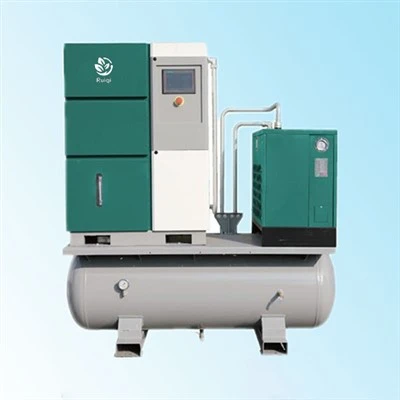
Hey everyone, let’s talk about something that’s probably been on your mind lately—those air treatment equipment units you see in offices, homes, even coffee shops. I’m [your company name here], and for years, we’ve been supplying these units, and one question we get all the time is: “Wait, does this thing mess with my room’s air pressure?” It’s such a good question, and honestly, it’s not something most people think about until they notice their door is hard to open, or their AC suddenly sounds way louder than before. Let’s break this down like we’re chatting over coffee, no fancy jargon, I promise. Air Treatment Equipment
First off, let’s get the basics straight—what even is room air pressure? Think of a room like a closed (or semi-closed) box. Air is a gas made of tiny molecules, right? Those molecules bouncing around create pressure. If there’s more air in that box, pressure goes up; if air’s escaping faster than it’s coming in, pressure drops. It’s all about equilibrium, basically. That’s key here because air treatment equipment is all about moving air in and out of that box—so of course it’s going to have an impact.
Now, not all air treatment units are the same. Let’s start with the most common ones: air purifiers. These are the ones with HEPA filters you plug in, usually just moving air around the same room, right? Wait, how do these work? Most standalone air purifiers have a fan that pulls air through the front, filters out dust, allergens, whatever, then blows clean air out the back or top. So if you’ve got that unit running in a small, sealed bedroom—no open windows, door closed—what’s happening here? Let’s say the purifier pulls, I don’t know, 100 cubic feet per minute (CFM) of air in, and pushes 100 CFM out. Wait, that seems equal, right? But here’s the thing: the intake is usually a smaller opening than the output. Because fans are built to push air more efficiently than pull it, especially with filters. So that intake creates a tiny negative pressure zone right at the unit’s inlet, like a little vacuum. But overall, for a small room? Unless you have a super powerful purifier (like 500+ CFM) and the room is super sealed (no gaps around windows, door fits tight), you’re not going to notice a big pressure difference. I’ve seen this firsthand—last year, a customer emailed us saying his purifier was making his closet door stick. Turns out, he ran the purifier nonstop in his 8×10 closet for three weeks, and the negative pressure from the small intake was pulling the door shut. That’s an extreme case, though—most people don’t run their purifiers in closets 24/7.
Next up, HVAC systems—wait, those are kind of air treatment too, right? A lot of people don’t separate HVAC from air treatment, but modern HVAC units come with MERV filters, sometimes UV lights for mold, even air scrubbers now. HVAC works by pulling air from your home (usually through vents in the floor or ceiling) and blowing it back out through supply vents. The big difference here is that HVAC is connected to your building’s ductwork, which ties into the outside air—wait, hold on, do all HVAC systems bring in outdoor air? That depends on if it’s a standard system or one with ventilation. If you have a sealed, modern home (super energy-efficient, which is great for heating/cooling bills, bad for air pressure), and your HVAC is only recirculating indoor air, then it can create pressure issues. Let’s say your HVAC has a 1,500 CFM fan pulling air in and pushing it out. If there’s no fresh air intake, all that air has to come from somewhere—so it’s going to pull air from under doors, through gaps in windows, even from your bathroom vents or dryer. That creates negative pressure in the whole house, not just a room. Suddenly, your bathroom fan sounds like it’s going to take off, or you smell gas from your water heater (that’s a big one—negative pressure can pull exhaust fumes back into the house). I can’t tell you how many times we’ve worked with commercial building managers who thought their HVAC was clean, but it was causing pressure issues that made employees complain about stuffy air or drafty rooms.
Then there’s another category: whole-house air treatment systems, like energy recovery ventilators (ERVs) or heat recovery ventilators (HRVs). These are made specifically to fix pressure issues, actually—because they bring in fresh outdoor air and exhaust stale indoor air, balanced. So if you have a 200 CFM ERV, it’s pulling 200 CFM of stale air out and pushing 200 CFM of fresh air in. No net pressure change. That’s why these are so popular for newly built, airtight homes. But here’s the catch—if your ERV is sized wrong? Like, you get a 400 CFM ERV for a 1,000 sq ft home, it’s going to over-ventilate, create positive pressure. What happens when a room has positive pressure? Air has to go somewhere—through gaps around windows, under doors, even into your attic or crawl space. That can push out insulation, or make your windows rattle, or even cause moisture issues in the attic because too much humid indoor air gets pushed there. I remember a residential customer last winter who installed an oversized ERV and noticed his walls were sweating. Turned out the positive pressure from the unit was pushing moist air into the wall cavities, which then condensed. We swapped it for the right size, and the problem went away. Super relatable, right?
Wait, let’s talk about commercial spaces too, because that’s a whole other ballgame. Think of a grocery store, or a restaurant kitchen. Kitchens have those big exhaust hoods, right? Those pull out tons of air—like 1,000+ CFM just from the range hood. If the building doesn’t have enough make-up air (air that comes in to replace what’s being exhausted), that creates major negative pressure. Suddenly, the front door is hard to open, cold air is blowing in from under the back door, and even the HVAC can’t keep up because it’s fighting that pressure. We worked with a pizza place in Chicago a couple years ago—their front door had a push bar that was sticking so bad, employees had to use their shoulders to open it. We installed a make-up air unit tied to their kitchen exhaust, balanced the air flow, and the door worked perfectly within a week. That’s the real-world impact, not just textbook stuff.
Now, let’s get to the part that matters most: is this pressure change bad? It depends on the size of the change and the type of space. For small, residential spaces: a tiny negative pressure (like 0.01 to 0.05 inches of water column, that’s the unit we use to measure pressure in HVAC) is totally normal, not a big deal. That’s why your bathroom fan works, it’s creating just enough negative pressure to pull steam out. But anything above 0.05? That’s when you start noticing issues—sticking doors, drafty rooms, even poor indoor air quality because the air is being pulled through gaps instead of filtered properly. Positive pressure is less common in homes, but if you have it above 0.03, you might notice stuff like dust being pushed onto your TV screen, or windows fogging up on the outside (wait, no—inside? Yeah, positive pressure can push moist air onto cold window panes, causing condensation).
For commercial spaces, it’s stricter because of code. Most building codes require that exhaust systems (like kitchen hoods, bathroom fans, laboratory fume hoods) are balanced with make-up air so pressure stays within a safe range. If you don’t do that, you can get fined, or worse—safety hazards like fumes getting into occupied spaces. That’s why when we supply commercial air treatment equipment, we don’t just drop off the unit and leave—we help with sizing, and we offer pressure balancing checks. Because it’s not just about filtering air, it’s about keeping the space comfortable and safe.
Wait, let’s bust a common myth here: “If my air purifier makes the room pressure negative, that’s bad for my health.” Is that true? For most people, no. The small pressure difference from a typical air purifier isn’t enough to pull unfiltered air into the room. The gaps around doors and windows are pretty small, and the purifier’s fan isn’t powerful enough to suck in air from outside through those gaps in a way that affects IAQ. The only time that’s a problem is if you have a gas appliance, like a furnace or water heater, that uses room air for combustion. Negative pressure can pull the exhaust from that appliance back into the room, which is a carbon monoxide risk. That’s why it’s super important to have your gas appliances checked if you notice pressure issues—something we always remind our customers.
So, what can you do if you’re noticing pressure issues in your space? First, check what air treatment equipment you’re running. Is it a small purifier? Probably not a big deal, unless it’s in a tiny, sealed room. Is it a whole-home HVAC or ERV? Check if it’s sized correctly—too big or too small is the most common issue. For commercial spaces, call a professional to balance your exhaust and make-up air systems. At the end of the day, air pressure and air treatment go hand in hand—you can’t have effective air cleaning or ventilation without getting that balance right.
Here’s the thing: we get that air treatment can feel confusing. You don’t just buy a unit and plug it in and forget it. Pressure impacts are real, but they’re totally manageable. If you’re a homeowner noticing weird drafts or sticking doors, or a business owner dealing with uncomfortable spaces or even code issues, we’re here to help. We don’t do one-size-fits-all—we work with you to figure out what your space needs, whether that’s a correctly sized air purifier, an ERV balanced to your home, or make-up air for your commercial kitchen.
If you want to chat more about how air treatment equipment affects your room’s air pressure, or you’re looking to upgrade your units (and get that pressure balance right), reach out to us. We’re happy to walk through your space, answer any questions, no sales pitch pressure—just real advice from a team that’s been in the air treatment game for years.
Ingersoll Rand Air Compressor Parts References:
- ASHRAE Handbook—HVAC Systems and Equipment, 2022
- Indoor Air Quality Association (IAQA) “Pressure and Indoor Air Quality” Guide, 2021
- U.S. Environmental Protection Agency (EPA) “Healthy Indoor Air Pressure” Fact Sheet, 2020
- Commercial Kitchen Exhaust Ventilation Standards, National Fire Protection Association (NFPA) 96, 2023
Suzhou Ruiqi Intelligent Equipment Co., Ltd.
As one of the most professional air treatment equipment manufacturers and suppliers in China, we also support custom service. As we have world-leading production equipment and strong manufacturing capabilities, we warmly welcome you to buy high quality air treatment equipment made in China here from our factory. Contact us for pricelist.
Address: No. 1729, Zhongshan South Road, Wujiang District, Suzhou City, Jiangsu Province, China, 16th Floor
E-mail: wts476626494@126.com
WebSite: https://www.ruiqicomp.com/
