As someone who’s spent the last decade designing, testing, and supplying integrated solar street lights to municipalities, small businesses, and remote communities across North America and parts of Southeast Asia, I’ve learned that every part of these systems matters. But if there’s one component that consistently determines how well a light performs—year-round, in extreme heat or frigid cold—it’s the battery. I’ve worked with hundreds of clients who swear their integrated solar street light outlasted competitors’ units… because of the battery choice. Others have regretted going with a cheap off-the-shelf battery that died halfway through a rainy winter, leaving a dark stretch of road or parking lot. That’s why today, I’m breaking down exactly what types of batteries we use for our integrated solar street lights, why each fits a specific need, and how we pick the right one for every project. No sales jargon, just real, on-the-ground experience that I’ve picked up troubleshooting and refining our products over the years. Integrated Solar Street Light
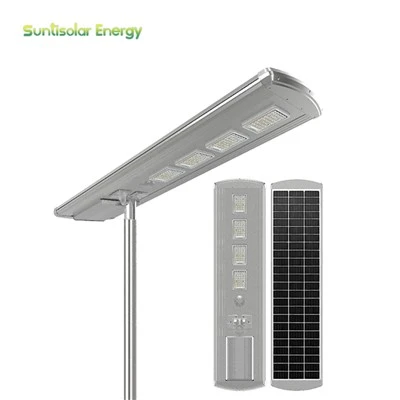
First, let’s ground this in what makes an integrated solar street light different from a traditional solar setup, because that’s where the battery plays a much more critical role. A standard solar street light has separate parts: solar panel, charge controller, battery, and light fixture, all wired together. Our integrated unit? It’s a single, self-contained assembly. The panel, battery, controller, and LED light are all housed in one waterproof, weatherproof casing—usually mounted on a slim pole or a standalone base. That means there’s no space for bulky, high-maintenance batteries, and every component has to work in sync to store solar energy during the day and power the light all night, even if it’s cloudy for a few days in a row.
Over the years, I’ve tested almost every battery type that’s ever been used in these systems, from old lead-acid models that would leak after two years to newer solid-state options that still feel too expensive for large-scale deployments. These days, three battery types dominate the integrated solar street light market, and we exclusively use two of them (with a very specific use case for the third). Let’s start with the one that’s been a game-changer for most of our customers: lithium iron phosphate, or LiFePO4 batteries.
I know, lithium is a buzzword right now, and a lot of companies throw it around to sound high-tech. But LiFePO4 is not the same as the lithium-ion battery in your phone or laptop, which can overheat, degrade fast, and catch fire if damaged. LiFePO4 is a subtype of lithium that’s specifically engineered for deep-cycle applications—meaning it’s built to be drained and recharged hundreds of times, not just used for short bursts of power. For our integrated solar street lights, this is the go-to battery for 80% of our projects, and here’s why, based on what I’ve seen in the field:
First, lifespan. A typical LiFePO4 battery lasts 3,000 to 5,000 full charge-discharge cycles. What does that mean in real terms? If your light is draining the battery to 50% every night and recharging to full every day, that’s about 5,000 cycles before it drops to 80% of its original capacity. That’s 10 to 15 years of reliable service. Compare that to a lead-acid battery, which only does 500 to 1,000 cycles max—most of them die in 3 to 5 years. That’s a huge difference for municipalities that don’t want to replace street light batteries every few years, or for remote sites where accessing the unit is a 2-hour drive or hike.
Then there’s temperature performance. Last winter, we installed a batch of 200 integrated solar street lights in a small mountain town in Colorado, where temperatures dropped to -22°F (-30°C) for six weeks straight. Other companies had used lead-acid batteries for a similar project the year before, and half of them died mid-season because lead-acid batteries lose almost 50% of their capacity in extreme cold. Our LiFePO4 units kept running 12 hours a night, no issues. We’ve also deployed units in Phoenix, where summer temperatures hit 115°F (46°C) — LiFePO4 handles that too, with only minor capacity loss (and that recovers when temperatures cool down, unlike some other batteries). That’s non-negotiable for sites in harsh climates, which is why LiFePO4 is our most requested battery.
Another big plus is energy density. LiFePO4 packs more power into a smaller, lighter space. That’s perfect for our integrated design—we don’t have to sacrifice panel size or light brightness to fit a battery that will last the whole night. The batteries are also sealed, so no leaks, no maintenance. You never have to top up water or check acid levels, which is a huge win for anyone who’s ever had to service a dozen street lights scattered across a city.
Now, the second battery type we use is lead-acid, specifically the sealed valve-regulated lead-acid (VRLA) variant, and only for very specific use cases. When would we pick lead-acid over LiFePO4? Almost always when budget is the absolute top priority for a short-term project, or when we’re dealing with a customer who only needs the light to run for 3 to 5 years (like a temporary construction site or a special event parking lot). Lead-acid is cheaper upfront, that’s the main draw. But there are big tradeoffs, and I never recommend it for permanent installations.
Let’s be clear: not all lead-acid is the same. The old flooded lead-acid batteries leak acid, corrode poles, and die fast. The VRLA type, which has a sealed design, doesn’t do that—it’s spill-proof. But even VRLA only does 500 to 800 cycles, as I mentioned earlier, so it will need to be replaced at least twice in the same time a LiFePO4 battery lasts. It’s also heavier, which makes installation harder, and it loses a lot of capacity in extreme temperatures—so it’s not good for places with very hot or very cold weather. We’ve had customers come back 3 years after installing lead-acid units, complaining that some of the lights were already dimming because the battery was dying. For a temporary site, that’s acceptable, but for a road that’s supposed to light a neighborhood for a decade? Not worth it in my book.
The third battery type that comes up sometimes is nickel-metal hydride (NiMH), but I’ll be blunt—we almost never use it for our integrated solar street lights. It’s lighter than lead-acid, safer than lithium, but it only lasts 500 to 1,000 cycles too, and it’s more expensive than VRLA, so there’s no real upside. It also doesn’t handle deep discharges well, which is what solar batteries have to do every night. I tested a small batch of NiMH units for a client in Florida a few years back, and they failed in 2.5 years, right around the time we expected them to. It’s not worth the cost or the performance, so we stick to LiFePO4 and VRLA.
Now, it’s not just about picking a battery type—we have to match the battery to the size of the solar panel and the LED light, which is a mistake I see a lot of other suppliers make. For example, a 10-watt integrated solar street light for a residential driveway doesn’t need a 100Ah LiFePO4 battery. That would be overkill, adding unnecessary cost and weight. We size the battery based on three main factors: average daily sunlight hours at the site, how many hours we want the light to run at night, and how many consecutive cloudy days we need it to last. For a site with 4 hours of sunlight a day, needing 8 hours of light, and enough capacity to last 3 cloudy days, we’ll size the LiFePO4 battery accordingly. For a remote site with almost no grid access, needing to last 5 cloudy days, we’ll bump that capacity up.
I also make sure to tell customers about battery maintenance, because even the best LiFePO4 battery will fail early if not cared for. Wait, did I say maintenance? LiFePO4 is low-maintenance, not zero maintenance. For example, if a solar panel is covered in dust for months, it won’t charge the battery fully, which can reduce its lifespan over time. That’s why we include a free maintenance guide with every order—simple things like cleaning the panel twice a year, checking the cable connections once a year, and making sure the light isn’t blocked by trees or shrubs. A lot of customers don’t realize that the battery’s performance is only as good as the rest of the system.
Over the years, I’ve had too many customers come to me after buying cheap integrated solar street lights from suppliers who cut corners on the battery. One city manager in Ohio told me he spent $20,000 on a batch of lights from a overseas supplier that used generic lithium-ion batteries, not LiFePO4, and by the end of the first winter, 30% of the lights were dead because the batteries couldn’t handle the cold. He had to replace them all within 18 months, which cost almost twice as much as the original purchase. That’s the kind of mistake we work hard to help clients avoid by being transparent about what’s inside our units.

If you’re in the market for integrated solar street lights, whether it’s for a new neighborhood, a highway project, a remote farm, or a temporary parking lot, don’t just ask about the price—ask about the battery type, the cycle life, and the warranty. We offer a 5-year warranty on all our LiFePO4-powered integrated solar street lights, because we stand behind the battery. For our VRLA units, we offer a 2-year warranty, which is fair because we know they have a shorter lifespan.
High Way All In One Solar Street Light At the end of the day, the battery is the heart of any integrated solar street light. A great panel and a bright LED mean nothing if the battery can’t store enough energy to get through the night. After 10 years in this business, I’ve learned that cutting corners on the battery costs you more in the long run, both in repairs and replacements. If you’re looking for reliable integrated solar street lights, with batteries that are built to last, feel free to reach out to our team to discuss your project needs. We can help you pick the right battery type, size, and configuration to fit your budget and location requirements.
References
- Dunlop, M. (2020). Deep-Cycle Batteries for Renewable Energy Systems. Routledge.
- US Department of Energy. (2022). Lithium-Ion Battery Technical Status and Market Trends for Stationary Energy Storage.
- Electric Power Research Institute. (2019). Performance of Lead-Acid Batteries in Extreme Temperature Environments.
- International Association of Lighting Designers. (2021). Guidelines for Solar-Powered Roadway Lighting System Components.
Yantai Xutai New Energy Technology Co., Ltd.
Yantai Xutai New Energy Technology Co., Ltd. is one of the most professional urban road integrated solar street light manufacturers and suppliers in China. With a professional production team, we are able to meet the needs of the majority of our customers. Please rest assured to buy premium urban road integrated solar street light made in China here from our factory.
Address: No.229, Tongshinan Road, Zhifu District, Yantai City, Shandong Province, China
E-mail: Joe.chu@suntisolar.com
WebSite: https://www.suntisolar.com/
