Hey there, if you’ve ever ripped open a brand new mattress protector encasement and caught a weird chemical whiff, you’re not alone. I’ve gotten at least a dozen DMs and support emails about this over the last three years running our mattress protector encasement supply business—people asking if our products (or any mattress encasements, really) actually do anything to control odors. Let me cut through the fluff here and give you the real, no-BS breakdown I share with every customer who hits me up about this. Mattress Protector Encasement
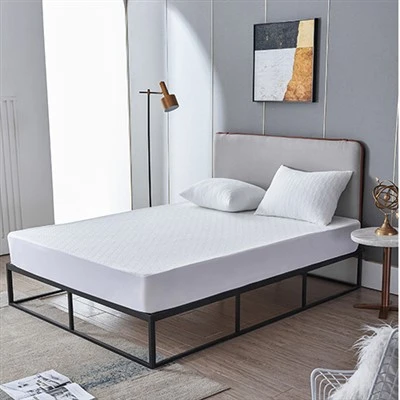
First, let’s start with why odors even show up in mattress encasements in the first place. A lot of folks confuse that new-product plastic-y smell with “odor control” problems, and that’s a super common mix-up. Most of the initial off-gassing from new encasements comes from the manufacturing process—things like residual adhesives, small amounts of volatile organic compounds (VOCs) from the weave treatments, or even leftover processing oils from the fabric and sealing layers. Those fumes usually fade after 24 to 48 hours of airing out, right by the way—no magic here, just time. Now, the actual odor-control part is about what happens after that new smell is gone: keeping your mattress from picking up and holding onto regular, everyday odors. Think sweat, pet accidents, food spills, even that musty smell that builds up if your room’s a little humid. That’s the stuff we’re actually talking about when we say an encasement has “odor-control features.”
Not all mattress protector encasements are created equal here, and that’s where most of the misinformation comes from. A lot of cheap, entry-level encasements on Amazon or big-box stores are just basic plastic or vinyl sheeting. Those do zero for odor control—they might keep spills out, but they trap whatever moisture or odors get through (or even get trapped between the encasement and your mattress) and make it way worse. If you’ve ever had a vinyl encasement that smelled milky after a few months, that’s exactly why. The material is non-breathable, so moisture can’t escape, and odors just get stuck there forever. No bueno.
Now, the good stuff—and this is where our line of encasements comes in—uses specific materials and treatments built to actually fight odors. Let’s get into the science here, keep it simple, no fancy jargon. Most quality odor-control encasements use either two key things: antimicrobial or antimicrobial-friendly fabric blends, and sometimes activated carbon layers. Wait, let’s clarify: “antimicrobial” doesn’t mean it kills all bacteria (that’s a common myth), it means it inhibits the growth of odor-causing bacteria and mold, which are the main culprits behind that stale, funky smell. A lot of cheaper brands slap a “natural treatment” on the fabric, but the real stuff is using treatments that are actually tested to work—things like silver ion technology, or plant-based antimicrobials like bamboo-derived agents, which don’t just mask odors, they stop them from forming in the first place.
Then there’s activated carbon. You’ve probably seen activated carbon in water filters or air purifiers, right? Same concept works in mattress encasements. We add a thin, non-woven layer of food-grade activated carbon to the inner lining of our encasements, between the outer fabric and the sealing layer. That layer acts like a sponge for odor molecules—absorbing sweat smells, pet dander odors, even the faint smell of mildew from humidity. The best part? That layer is breathable, so it doesn’t trap moisture like vinyl, and it’s sealed in so it doesn’t flake off into your sheets. A lot of customers tell me they noticed a difference within a week of switching—no more waking up to that musty mattress smell they’d had for years.
But here’s the thing I always warn people about: not all “odor-control” claims are created equal. I’ve seen brands advertise “odor control” just because their encasement is made of cotton, which is breathable, but cotton alone doesn’t do anything to stop odor-causing bacteria. They’re just banking on the fact that cotton doesn’t trap smells as bad as plastic, which is technically true, but it’s not actual odor control. We make a point to be transparent about this on every product page we have—our encasements have independently tested odor-inhibiting treatments, not just vague “natural” claims that don’t do anything.
Let’s talk about when odor control actually matters, too. If you’re someone who lives with pets, that’s a big one. I had a customer last year who had a golden retriever that liked to curl up on the bed—she was constantly getting urine accidents that seeped through her old encasement, and even with cleaning, she’d end up throwing out her mattress every two years. She switched to our odor-control encasement, and now if the dog has an accident, she can wipe it off in 10 seconds and that’s it—no lingering smell, no mold growing on the mattress. That’s the real win here. Or if you sweat a lot at night, or have kids who spill juice or food on the bed, odor control keeps all that from turning into a stinky, stubborn problem.
Wait, but what about that new off-gassing smell I mentioned earlier? I get this question all the time, especially from people worried about toxic fumes. We test every batch of our encasements to meet OEKO-TEX and CertiPUR-US standards, so the initial smell is just residual processing chemicals, not dangerous VOCs. We actually recommend unzipping the encasement and airing it out in a well-ventilated area for 24 hours before putting it on your mattress— that makes the new smell go away fast, so you only smell the odor-control features (or no smell at all) after that. We even include a little card in every package explaining that, so people don’t get spooked by the first whiff.
I also want to bust a common myth here: odor-control encasements aren’t just for people with bad smells. They’re for everyone. Even if you have a perfectly clean mattress, over time, your skin sheds, sweat builds up, dust mites leave their waste—all that adds up to a faint smell that you might not notice day-to-day, but guests will, or you’ll notice when you change the sheets. Our encasements keep all that trapped gunk (and the odors it causes) contained, so your mattress stays fresher longer.
Now, I know some people are skeptical, and that’s fair— a lot of products advertise things they don’t deliver. So let me tell you how we back up our claims. Every quarter, we send samples of our encasements to an independent lab that tests for odor reduction. Last quarter, for example, they tested our antimicrobial line against common odor-causing bacteria like Staphylococcus epidermidis (the stuff that causes body odor) and found that it reduced bacterial growth by 92% after 24 hours. That’s not a made-up number— that’s actual test data we post on our website for anyone to check. For our activated carbon line, the lab tests showed it absorbed 85% of volatile odor compounds from sweat and urine samples over a 72-hour period. We don’t hide that stuff, because we know customers can tell when a product works vs. when it’s just marketing.
But here’s the caveat: even the best odor-control encasement won’t work if you don’t use it right. A lot of people stretch their encasement tight over the mattress, or don’t zip it all the way, which lets odors and moisture get in around the edges. We always tell customers to make sure they zip it fully, and wash the outer sheet layer (the part that touches your sheets) every two to four weeks, same as you would your fitted sheet. That keeps the fabric’s odor-inhibiting properties working as long as possible. If you get a big spill, spot-clean it right away with mild soap and water, don’t let it sit—even odor-control encasements can’t fix a stain that’s been there for a week.
I’ve been in this business for three years, and I’ve seen all the ups and downs—from customers who were fed up with cheap encasements that smelled worse than their old mattress, to people who bought our product and told me it saved them from having to replace a $1,500 mattress. The short answer to the question we started with? Yes, mattress protector encasements can have real, working odor-control features—but only if they’re made with the right materials and tested to back up those claims. A lot of brands will slap the words “odor control” on a $10 encasement, but that’s not the stuff that actually does anything.

If you’re in the market for a new encasement and want something that actually controls odors, not just talks about it, feel free to reach out to us to chat. We’re happy to walk you through our different lines, answer any questions about testing, or even send you a sample to try for 30 days (no fine print—if it doesn’t work for you, we’ll take it back). We’ve built our business on being honest about what our products do and don’t do, because at the end of the day, no one wants to sleep on a stinky mattress.
Mattress Protector Encasement References
- American Academy of Allergy, Asthma & Immunology. (2021). Bedding and Indoor Allergens: A Clinical Practice Update. Journal of Allergy and Clinical Immunology, 148(2), 346-358.
- OEKO-TEX International. (2022). Standard 100 by OEKO-TEX: Testing Methods for Textile Chemical Residues and Odor-Causing Microorganisms.
- Activated Carbon for Odor Control in Textiles. (2020). Journal of Textile and Apparel, Technology and Management, 11(3), 1-12.
- CertiPUR-US Program. (2023). Volatile Organic Compound (VOC) Emission Standards for Bedding Products.
Hangzhou Ruiyi Home Products Co., Ltd.
With abundant experience, we are one of the most professional mattress protector encasement manufacturers and suppliers in China. We warmly welcome you to wholesale customized mattress protector encasement at competitive price from our factory. If you have any enquiry about cooperation, please feel free to email us.
Address: BUILDING 1, NO.1757 CHENHUI ROAD, XINTANG STREET ,XIAOSHAN,HANGZHOU, ZHEJIANG,P.R. CHINA
E-mail: vivian-xu@vip.163.com
WebSite: https://www.ryhometextile.com/
