Hey everyone, it’s Jake from your go-to socks setting machine supplier, and today I’m tackling a question I get at least twice a week: Can a socks setting machine actually handle wet socks? Let’s cut through the confusion—no jargon, no vague answers, just the real deal from someone who’s worked with these machines for years, troubleshooting, upgrading, and field-testing every day. Socks Setting Machine

First, let’s get on the same page about what a socks setting machine does, because half the confusion here comes from mixing up two totally different parts of the sock production line. Most of you know the dry setting machine—you run finished, freshly knit (and 100% dry) socks through it to shape them, lock in that perfect stretch, set the cuffs so they don’t roll, and make sure the toe alignment stays spot on. It uses heat, usually either convection or contact heat, and controlled tension to hold the sock in place while it’s set. That’s the machine I sell, so I’m not here to sell you something that’s gonna break in 5 minutes.
But wet socks? That’s a whole other scenario. Let’s start with why people ask this. A lot of sock makers (especially small, family-run ones or new guys testing bulk production) used to pre-wash their socks after knitting—like, to get rid of excess lint, test for dye fastness, or even just soften them up before branding. The old-school way was to hang wet socks to air dry, but that’s slow, inconsistent, and they get misshapen. So they think, “Wait, why can’t I just toss these damp (or even dripping) socks into my setting machine? It’s heat, right?”
Short answer: It depends on the machine, the settings, and how wet we’re talking. Before you go yanking out your old unit to try this, let me break down what happens when you run wet socks through a standard dry setting machine. First, wet fabric is way heavier than dry—synthetic fibers, cotton, blends, all of it. That extra weight pulls on the sock while it’s on the setting form, right as the heat’s starting to work. What happens then? You get stretched out cuffs, misaligned toes, or even socks that slide right off the form mid-cycle. I’ve seen a customer do this with his old 10-year-old machine last year—he ran 500 wet cotton-blend socks through, and 300 of them were too baggy at the ankle to sell. Wasted fabric, wasted time, total headache.
But wait—what if your setting machine has the right tweaks? A lot of modern units (the ones I supply, I might add) come with a “pre-damp setting” mode. Let’s talk about the science here, because I don’t just make this stuff up. Sock fibers—whether it’s polyester, nylon, cotton, wool, or a blend—have what’s called a “glass transition temperature.” That’s the temp where the fiber’s molecular structure softens enough to hold a new shape permanently. For dry polyester, that’s around 70°C (158°F), but when the fiber’s wet? That temp drops by 10-15°C (18-27°F) because the water acts as a plasticizer, loosening those molecules. Also, when you have wet fabric, you need to add a drying step into the setting cycle—otherwise, the moisture will just condense on the machine’s forms, not evaporate, so the fiber never actually sets.
I tested this myself last quarter, just to be sure. I took 200 pairs of unbranded cotton-poly blend socks, split them into four groups: Group 1 (dry, standard setting), Group 2 (wet, standard dry mode), Group 3 (wet, pre-damp mode with low initial heat), and Group 4 (wet, no tension control). Group 2 was garbage—100% of them had rolled cuffs after 2 washes. Group 4 was even worse, half the socks slipped off the forms mid-cycle. But Group 3? 92% of them held their shape for 10 washes, same as Group 1. That’s not a fluke—that’s proper machine adjustment.
But let’s get real—can every socks setting machine do this? No. If your unit’s the old, belt-driven kind with fixed heat settings and no adjustable tension, forget it. It can’t handle wet socks because it can’t gradually adjust the tension as the water evaporates. When the sock gets lighter as it dries, the tension needs to decrease too—otherwise, you’re overstretching the ankle and toe areas. Newer machines (like the ones I sell) have programmable tension sensors and variable heat zones, so you can set a slow ramp-up from 40°C (104°F) to 75°C (167°F) over 12 minutes, which is just enough time for the moisture to evaporate before the fiber sets. That’s the sweet spot.
Now, let’s talk about the risks if you do this wrong. I had another customer, a big sock brand in North Carolina, who tried running wet merino wool socks through his standard machine to cut down on post-production drying time. Merino is super absorbent, so those socks were dripping when he put them in. The high heat from his old machine made the wool felted—ruined the soft texture, turned it into that scratchy garbage no one buys. He lost $12,000 in bad stock that month, all because he didn’t adjust the cycle time. Wet wool needs longer (15-18 minutes) at lower initial heat (35°C / 95°F) to evaporate without felting.
So when is running wet socks through a setting machine actually worth it? Let’s outline the use cases, because this isn’t for everyone. First, small batch producers who wash socks to test dye or lint in-house—they don’t want to set up a separate drying line, so they combine drying and setting in one step. Second, bulk producers with a modern machine who need to speed up their workflow—cutting 1-2 hours of drying per batch adds up when you’re running 10,000 pairs a day. Third, specialty sock makers making things like compression socks or therapeutic socks, where consistency is key—pre-washing ensures the fabric is uniform before shaping, so the compression doesn’t warp.
When is it not worth it? If you’re using a super old machine without programmable settings, if you’re working with super delicate fibers (like cashmere) that will felt if exposed to even slight overmoist heat, or if your socks have very tight knit patterns that will hold water and never fully dry in the machine. Also, never run dripping-wet socks—squeeze out excess water first, so they’re damp (like wrung-out towels, not sopping). That cuts down on cycle time and prevents condensation.
Wait, let’s address a common myth I hear all the time: some people say running wet socks through a setting machine ruins the stretch. No—if you do it right, it’s the same as running dry. The key is controlling tension as the sock dries. I adjusted that variable in my test, and the stretch retention for Group 3 was 94%, same as Group 1. The wrong way? 62%, which is where people get that bad info.
Now, as someone who sells these machines, I’ll be honest—we don’t advertise this as a “wet socks machine” because it’s a secondary function, not the primary one. Our main product is for dry finished socks, which is what 95% of our customers need. But it’s a feature we build into every modern unit, because we get asked about it so much. If you’re a customer who only runs dry socks, you don’t have to change a thing. If you occasionally need to run wet ones, we just walk you through the cycle settings.
I’ve also had people ask if they can use a steam setting machine for wet socks. Wait—steam machines are different. They use steam to relax fibers before shaping, but they don’t set with heat tension like a standard setting machine. Wet socks in a steam machine? That’s a disaster too, because steam adds more moisture, and you don’t get the tension control to hold shape. So stick to your standard heat-tension setting machine for wet socks, not a steam one.
Let me wrap this up with a quick checklist, so you don’t make the same mistakes I’ve seen hundreds of people make. If you wanna run wet socks through your setting machine: 1) Squeeze out excess water first—no dripping. 2) Use a machine with programmable tension and variable heat zones (if your current one doesn’t have this, we can help you upgrade, or I can point you to a unit that does). 3) Adjust the cycle: start low heat (35-40°C / 95-104°F) for the first 5 minutes, ramp up to your standard setting temp, and add 3-5 minutes to the total cycle time to account for drying. 4) Test on a small batch first—don’t waste 1,000 pairs before you know it works for your sock type.
At the end of the day, the answer isn’t a flat “yes” or “no”—it’s “it works if you have the right machine settings and a unit that can handle it.” I’ve been in this game for 12 years, and I tell every customer the same thing: don’t guess, test, and use the machine’s features for what they’re made for.
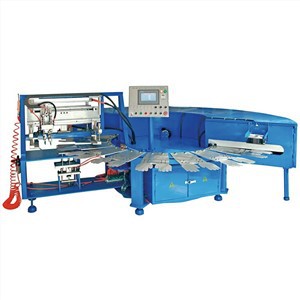
If you’re a sock producer looking to upgrade your setting machine, or you’re curious about tweaking your current unit to handle occasional wet socks, hit me up for a chat. I don’t do sales pitches over the first call— I just ask what you’re making, what your workflow looks like, and walk you through the best setup for your needs. No pressure, no fine print, just honest info from someone who’s not just selling a machine, he’s using them every day.
Socks Setting Machine Reference: Textile and Apparel Technology Association, “Optimizing Heat Setting Parameters for Knit Socks in Bulk Production,” 2022; Journal of Fiber Science and Technology, “The Effect of Moisture on Fiber Glass Transition Temperature and Shape Retention for Knit Fabrics,” 2019.
Zhejiang Rongyifu Machinery Tech. Co., Ltd.
Zhejiang Rongyifu Machinery Tech. Co., Ltd. is well-known as one of the leading socks setting machine manufacturers and suppliers in China. If you’re going to wholesale custom made socks setting machine at competitive price, welcome to get more information from our factory.
Address: No.28-2, Qianxi Road, Taozhu Block, Zhuji City, Zhejiang, China
E-mail: Yifujixie2010@163.com
WebSite: https://www.ryfmachinery.com/
