If you’ve ever had a kitchen appliance die suddenly during a summer thunderstorm, or watched a home theater system flicker and shut down for no obvious reason—chances are a power surge was to blame. As someone who’s been supplying surge protection devices (SPDs) for over a decade, I get asked all the time: “How does this little box actually keep my equipment safe?” It’s not magic, it’s science—simple, practical science that prevents thousands of dollars in damage every single day. Let me break it down like I would for a customer sitting across my desk, no jargon required. Surge Protection Device

First, let’s talk about what a surge actually is. Most of the time, the power coming into your home or business is a steady, consistent flow—like water from a garden hose turned on full, no sudden spikes or drops. A power surge is a sudden, short-lived spike in that voltage—think of someone pinching the hose for a split second, then letting go. These spikes can range from tiny, barely noticeable blips to big, destructive jumps that hit hundreds or even thousands of volts. There are two main types of surges you need to know about: external and internal.
External surges are the ones you associate with bad weather. Lightning is the big one—when a lightning bolt strikes a power line or utility pole, it can send a massive surge racing through the grid toward your building. Even lightning that hits miles away can create a surge strong enough to damage sensitive electronics, because the electrical grid is basically one big network of wires carrying power to everyone. Then there are switching surges from the utility company—when they turn on or off large equipment like transformers, it creates a tiny surge that can ripple through the lines, too.
Internal surges are the ones most people don’t think about, but they’re actually more common in daily life. Every time you turn on a large appliance—like an air conditioner, a refrigerator, a microwave, or a space heater—it draws a lot of power at once, which creates a small surge. Even turning on multiple appliances at the same time can add up to a surge that wears down your electronics over time. Old wiring or faulty electrical systems can also create internal surges, because they can’t handle the steady flow of power properly. I’ve had customers tell me their Wi-Fi router died after they turned on their washing machine and dryer at the same time— that’s an internal surge doing exactly that.
So, how does an SPD stop that surge before it reaches your expensive gear? At its core, an SPD is a safety device that’s installed between the incoming power line and your sensitive equipment (or your building’s electrical panel). Its job is simple: when normal voltage is flowing, the SPD does nothing—lets the power pass right through. But the second a surge hits, the SPD activates, diverting the excess voltage away from your equipment and into the ground, where it’s harmlessly dispersed. No more pinched hose, no more spike getting to your laptop, TV, or commercial server rack.
The key component that makes this work is a voltage-dependent resistor, or VDR—most commonly made of metal oxide varistors (MOVs), which are the workhorses of nearly all residential and commercial SPDs. Let’s talk about how an MOV works, because it’s the genius part. An MOV is made of a ceramic material laced with metal oxide grains, sort of like tiny, connected sand grains with metal contacts on either side. When voltage is low (normal, everyday power), the MOV acts like an insulator—so no power flows through it, just like it’s not there. But when voltage spikes past a certain threshold (like 120 volts for a home system, or higher for commercial use), the metal oxide grains create millions of tiny, conductive paths. It’s like flipping a switch instantly—so much so that it happens in nanoseconds, way faster than a surge can damage anything. That excess power flows through the MOV and into the ground wire, bypassing your equipment completely.
Wait, but what happens after the surge is over? The MOV switches back to being an insulator immediately, so power goes back to normal flow. That’s why you don’t notice the surge at all—your equipment never sees it. But MOVs aren’t invincible, which is why it’s important to choose an SPD sized for your needs. Every time an MOV absorbs a surge, it takes a little wear and tear, like a car’s brake pads wearing down over time. Minor surges from turning on appliances won’t do much, but a big lightning surge can use up an MOV’s capacity in one hit. That’s why all good SPDs have a status light—when it turns red, it means the MOV is worn out and needs to be replaced. I always tell my customers to check that light a few times a year, especially after a big storm, because replacing an SPD is way cheaper than replacing a TV or a server.
But wait, MOVs aren’t the only technology in SPDs, especially for commercial use. For facilities with really sensitive equipment—like hospitals, data centers, or manufacturing plants—we use other components too, like gas discharge tubes (GDTs) and thyristors. GDTs are like tiny tubes filled with gas that ionize when a surge hits, creating a path to ground. They’re really good at handling big, powerful surges from lightning, and they last longer than MOVs in some cases. Thyristors, on the other hand, are like a switch that triggers at a specific voltage, designed to handle large amounts of current quickly. For commercial applications, we often combine these technologies into a multi-stage SPD: the first stage takes the brunt of the big external surge, the second stage smooths out any leftover voltage, and the third stage protects the sensitive internal components of your gear. That layered approach is called coordinated protection, and it’s the difference between an SPD that works for a year and one that works for 10.
I want to be clear, though—an SPD isn’t the same as a power strip you plug your laptop into, and that’s a common mistake. Those little power strips are often called surge protectors, but most of them only have one small MOV, and they’re designed for low-power devices, not big surges or heavy equipment. For example, a power strip for your desk can handle a small surge from a nearby appliance, but it won’t stand up to a lightning strike. That’s why we sell different types of SPDs for different needs: whole-house SPDs that install in your main electrical panel, commercial SPDs for office buildings and warehouses, and specialized SPDs for data centers, solar panels, and even electric vehicle chargers. I’ve had customers buy cheap power strips for their server room, and when a small surge hit, the power strip melted, and the servers died. That’s a avoidable cost, and it’s why we make sure every customer gets matched with the right SPD for their specific setup.
Let’s talk about a real example to make this concrete. Last year, a small business owner in downtown Chicago called me after a thunderstorm had blown out their point-of-sale system and two office laptops. They’d used a cheap power strip, so we sent a technician out to install a whole-house SPD in their electrical panel, plus small SPDs for the POS and laptop chargers. A month later, another storm rolled through, and this time, their POS didn’t even flicker. The owner called me up laughing, saying they’d just saved themselves $5,000 in replacement costs. That’s the kind of result we’re here for. The SPD did exactly what it’s supposed to: when the lightning surge hit, the whole-house SPD diverted the excess voltage to the ground, and the point-of-sale SPD caught any leftover, tiny surge that might have gotten through. No damage, no downtime.
Now, you might be wondering if you need an SPD. The short answer is: if you have anything in your home or business that costs more than a few hundred dollars and is plugged into the grid—yes. Even if you live in an area with very few thunderstorms, switching surges from the utility company and internal surges from daily use add up over time. Every surge, even a small one, eats away at the lifespan of your electronics. Your TV, your refrigerator, your HVAC system, your security cameras, your business servers—all of them will last longer if they’re protected by an SPD.
But not all SPDs are created equal, and there are a few red flags to watch out for when you’re shopping. First, check the “voltage protection level” (Vp)—that’s the maximum voltage the SPD lets through to your equipment. A good whole-house SPD has a Vp of around 1,200 volts or lower. Cheap power strips often have a Vp of 2,000 volts or higher, which means they’re letting more surge through than they’re stopping. Second, check the “current rating”—that’s how much surge current the SPD can handle, measured in kiloamperes (kA). A whole-house SPD should have a rating of at least 40 kA, and commercial SPDs go up to 100 kA or more, because they have to handle bigger surges. Third, make sure the SPD is tested and certified by organizations like Underwriters Laboratories (UL) or the International Electrotechnical Commission (IEC). That means it’s been put through rigorous testing to make sure it works when you need it, not just on the packaging.
As an SPD supplier, I don’t just sell a box and walk away. I work with every customer to figure out exactly what they need. For a residential customer, that might mean a whole-house SPD plus SPDs for their most expensive electronics. For a small café, it’s a whole-shop SPD plus units for the POS, espresso machine, and refrigeration system. For a data center, it’s a coordinated system of SPDs for each part of the power distribution path. I’ve been doing this long enough to know that one size never fits all, and taking the time to get the right setup is what prevents costly failures down the line.
Another thing I tell customers is that installing an SPD is one of the most cost-effective upgrades you can make for your home or business. A whole-house SPD costs a few hundred dollars, and it protects tens of thousands of dollars in equipment. Compare that to replacing a $2,000 TV or a $10,000 server, and the math is obvious. I’ve seen too many people cut corners here, and it always ends up costing them more in the long run.
At the end of the day, an SPD is a simple device with a critical job: it’s the first line of defense for your electronics against the unseen surges that happen every day. It doesn’t generate power, it doesn’t add any extra features, it just does one thing really well: diverts dangerous voltage away from what you care about. The science is solid, it’s been around for decades, and it’s proven to work millions of times every year.
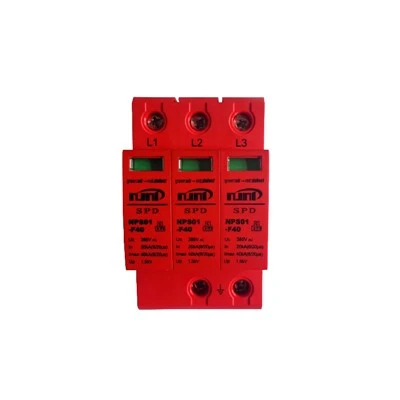
If you’re looking to protect your home, office, or sensitive equipment from power surges, don’t wait until the next storm hits. Reach out to us to discuss your specific needs. We’ll help you figure out what type of SPD is right for your setup, answer any questions you have about how it works, and make sure you get the right protection at a fair price. Don’t let a preventable surge turn a bad day into a costly one.
T1 25KA Surge Protective Device References:
- Underwriters Laboratories (UL). Standard for Surge-Protective Devices, UL 1449.
- International Electrotechnical Commission (IEC). Surge Protective Devices for Low-Voltage Power Systems, IEC 61643.
- IEEE Guide for Surge Protection of Equipment Connected to AC Power and Communication Circuits, IEEE C62.41.2.
- National Electrical Manufacturers Association (NEMA). Application Guide for Surge Protective Devices.
Nanjing Ningpu Lightning Protection Equipment Manufacturing Co., Ltd.
As one of the most professional surge protection device manufacturers and suppliers in China, we’re featured by quality products and good price. Please rest assured to buy customized surge protection device made in China here from our factory. Also, pricelist is available.
Address: Building 1, No.20 Shengyuan Road, Lishui Economic Development Zone, Nanjing City, Jiangsu Province, China
E-mail: 3796023563@qq.com
WebSite: https://www.npspd.com/
