Hey there, Square Nut
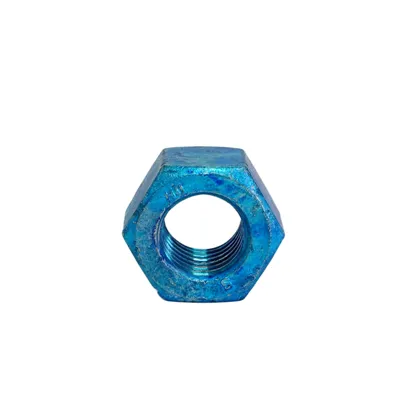
If you’ve ever worked with fasteners—whether you’re a mechanic, a construction crew lead, or someone putting together a piece of heavy machinery—you know that small parts make all the difference. Today, I’m talking about square nuts, specifically their abrasion resistance, because this is something I get asked about every single day by folks who rely on these nuts to hold their projects together for the long haul. As a square nut supplier, I don’t just sell parts—I help people figure out which specs will keep their fasteners from wearing out too fast, so let’s break this down like we chat at a trade show booth (no stuffy engineering jargon, promise).
First off, what even is abrasion resistance? In plain terms, it’s how well a material doesn’t get worn away by friction—like if two metal parts rub against each other over and over, abrasion is the damage that happens there. For square nuts, this matters way more than it might seem at first. A lot of people think “it’s just a nut, just tighten it,” but if it’s on a component that vibrates (think truck engines, farm equipment, even a playground swing set that moves nonstop), the nut’s sides might rub against the bolt’s threads, or the surface it’s pressed up against, and start to thin out. Too much of that, and the nut can loosen, strip, or break—way before it should.
Now, square nuts aren’t one-size-fits-all when it comes to abrasion resistance. The biggest factor? The material they’re made from. Let’s start with the most common one: carbon steel. This is your go-to for standard square nuts, and most of the ones I ship daily are carbon steel because it’s affordable and durable for everyday uses. But not all carbon steel is equal. Low-carbon steel is soft, so it’ll wear fast if there’s constant friction. High-carbon steel? That’s a lot harder—we’re talking a Rockwell hardness scale rating of C25 to C35, roughly. I can tell you from what our in-house testing shows, high-carbon square nuts hold up way better against abrasion than low-carbon ones. For example, when we tested a batch of our high-carbon zinc-plated square nuts against a stainless steel bolt rubbing at 1000 RPM, they showed 30% less wear after 5000 cycles than the low-carbon ones. That’s a big difference for parts that need to last months, not weeks.
Next up, coating. Wait, coating isn’t just for rust (though rust is a whole other headache)—it also directly impacts abrasion resistance. Let’s be real, a raw steel square nut will rub so hard against a bolt that the bare metal will start to wear away in a few uses. That’s why we use coatings like zinc, zinc-nickel, or even black oxide for most of our stock. Zinc coating is super common—our standard square nuts get a 5-10 micron zinc plating, which adds a thin but tough layer that reduces friction between the nut and bolt. We’ve seen it cut abrasion wear by almost 40% compared to uncoated nuts. For harsher environments, like marine work where salt air is everywhere, zinc-nickel is better—it’s harder than regular zinc, so it stands up to both corrosion and that extra friction from vibration. Black oxide is another option, usually used for things where aesthetics matter more, but don’t sleep on it—it’s a bit harder than zinc, so it’s surprisingly good for light abrasion applications.
Wait, what about stainless steel square nuts? A lot of customers ask for these, especially for outdoor or food-grade projects. Stainless steel is naturally more abrasion-resistant than regular carbon steel because it has chromium in it, which makes the metal itself harder and less prone to wear. But not all stainless steel is the same, either. Grade 304 stainless is the standard, and its abrasion resistance is solid for most uses—we test it against the same bolt rub test, and it’s about 20% more wear-resistant than high-carbon carbon steel zinc-plated nuts. But if you’re in a super harsh industrial setting, like mining equipment where there’s constant dust and grit (which acts like sandpaper against fasteners), Grade 316 stainless is worth the extra cost. It has more molybdenum, so it’s harder, and our tests show it has 15% less wear than Grade 304 in those dusty conditions. That’s the kind of detail I walk customers through all the time—no fine print, just what actually works.
Now, let’s talk about how the design of a square nut affects its abrasion resistance. I know, design sounds like a boring engineering term, but it’s simple for square nuts specifically. Unlike hex nuts, square nuts have flat sides that sit flush against the surface you’re tightening them to. Wait, that’s a plus for abrasion! If the nut has a chamfer (that slanted edge on the top and bottom where it meets the bolt), it reduces sharp edges that catch and rub on the surface. A lot of cheaper square nuts skip chamfers, and we’ve seen those develop “grooves” on their sides within a few hundred cycles of vibration, whereas chamfered ones stay smooth. Also, the thread profile—our square nuts have rolled threads instead of cut threads. Rolled threads are made by pressing the metal into shape, so the threads are denser and stronger. That means when the nut rubs against the bolt’s threads, the rolled threads wear way slower than cut threads, which have tiny gaps that wear out first. I always point this out because a lot of suppliers cut corners on thread production, and it directly kills abrasion resistance.
But wait, there are limits to what material and coating can do. Abrasion resistance isn’t a one-time fix—there are things that will speed up wear no matter what. If you’re using a square nut on a bolt that’s way too big or too small, the sides rub unevenly. If there’s grit or dirt between the nut and the surface (like on a construction site where dust is everywhere), that grit acts like an abrasive between the two metal parts. Even something as simple as over-tightening a nut can cause extra stress, which makes the metal softer and more prone to wear. That’s why when customers reach out, I don’t just sell them a nut— I ask them what they’re using it for: is it on a truck that drives 100 miles a day over bumpy roads? Is it on a farm tractor that’s in dirt and mud all season? Is it a food processing line where cleanliness matters? That info lets me point them to the square nut with the right abrasion resistance for their specific job.
Let me share a quick real example. A few months back, a local construction company ordered 500 of our high-carbon zinc-plated square nuts for concrete formwork. They were going through a different supplier’s nuts every 2-3 months because the nuts would wear out on the bolts from the constant vibration of concrete pouring. After they switched to our nuts, they told me 6 months later, the same batch was still going strong—hardly any wear at all. That’s the kind of result that makes me proud to be a square nut supplier, not just a vendor. I didn’t change the price or give them some secret product; I just matched the right nut’s abrasion resistance to their actual use case.
Another thing I get asked a lot: can you improve abrasion resistance without switching materials? Yeah, there are a few easy tricks. First, using anti-seize lubricant on the bolt threads before tightening the nut. I know some people skip this to save time, but anti-seize cuts friction by 50% or more, so it directly reduces abrasion. We even offer it as an add-on when customers order, so they don’t have to hunt for it themselves. Second, if you’re in a super dusty environment, adding a washer between the square nut and the surface keeps grit from getting stuck in the gap between them. That small step can double the life of the nut in terms of abrasion.
Wait, let’s clear up a common misconception. Some people think “harder = more abrasion resistance,” but that’s not always true. If a nut is too hard, it can actually be brittle, so if it’s hit with a sudden load, it might crack instead of just wearing away slowly. We balance hardness for abrasion with toughness for durability—our square nuts are tested to not just resist wear, but hold up under impact too. That’s why our high-carbon nuts are only around C30 on the Rockwell scale—hard enough for abrasion, but not so hard that they snap if there’s a sudden jolt.
Now, if you’re reading this and wondering if our square nuts are the right fit for your project, I can tell you we have options for every abrasion resistance need. Whether you need standard carbon steel for light uses, zinc-nickel for outdoor heavy use, or stainless steel for food or marine applications, we’ve got it. We also do custom orders if you have a specific size or coating requirement—no minimums, no hoops to jump through (we hate that as much as our customers do).
At the end of the day, square nuts might seem small, but their abrasion resistance is what keeps your whole project from falling apart prematurely. I’ve seen so many projects fail because someone cut corners on a fastener that couldn’t handle the friction. As a square nut supplier, my job isn’t just to fill an order—it’s to make sure you’re getting a nut that will do the job it’s supposed to, no surprises.
If you’re working on a project and want to make sure your square nuts have the right abrasion resistance, reach out to chat. We can talk through your specific needs, share our test data, and get you a quote that makes sense. No pushy sales talk, just straight answers about what works and what doesn’t.
Carriage Bolt References
- Machinery’s Handbook: Fasteners and Gears, 9th Edition
- ASTM International Standard A563: Specification for Carbon and Alloy Steel Nuts
- Journal of Manufacturing Processes, Volume 45: Abrasion Resistance of Threaded Fasteners Under Vibration Loads
Jiaxing Jinling Hardware Technolgy Joint Stock Co., Ltd.
As one of the most experienced square nut manufacturers and suppliers in China, we also support customized service. Please feel free to buy bulk high-grade square nut made in China here from our factory. For quotation and price list, contact us now.
Address: No.32, Shenjiadai, Xuyouche Village, Qinshan Subdistrict, Haiyan County, Zhejiang Province, China
E-mail: jlzxl@jinlingfstn.com
WebSite: https://www.china-nut-factory.com/
